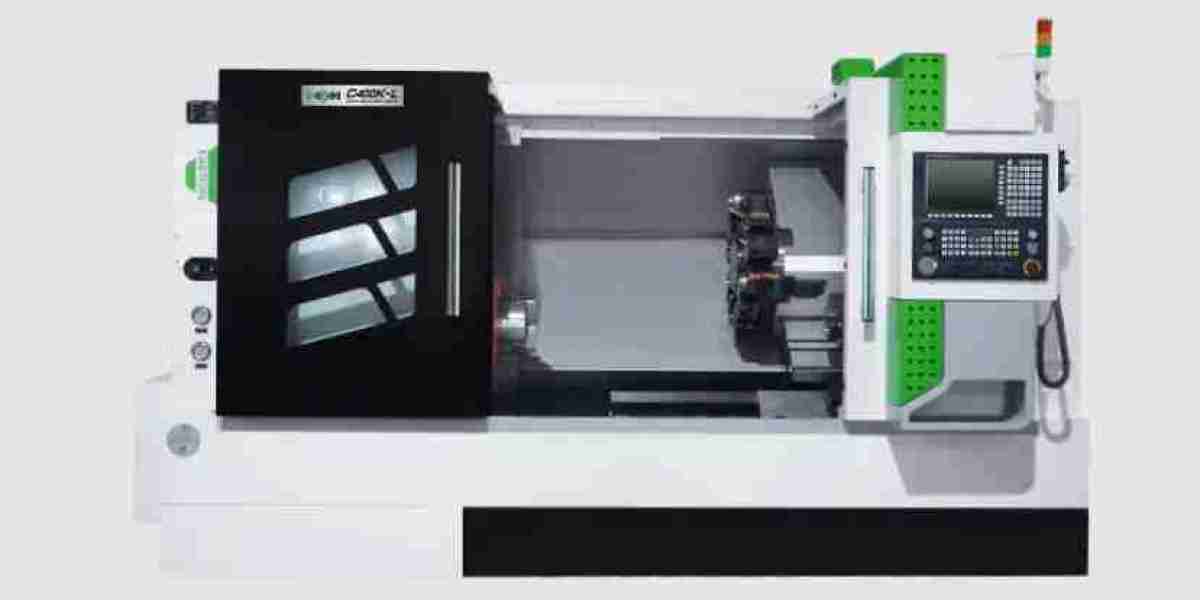
Somewhere between traditional flat-bed machines and increasingly complex multi-axis centers sits a design choice quietly reshaping countless production floors: the slant bed configuration. CNC slant bed lathes didn't emerge overnight, yet their steady adoption across metalworking shops tells a story worth understanding.
Picture cutting fluid and metal shavings pooling around a workpiece during extended runs. Flat surfaces trap that mess, forcing periodic pauses for manual cleanup interrupting otherwise steady production rhythms. Angled construction solves this differently — gravity pulls debris downward and away, letting cutting continue uninterrupted for longer stretches.
Precision improves alongside this practical benefit. CNC slant bed lathes distribute structural mass differently compared flat counterparts, often resulting sturdier resistance against vibration during aggressive cuts. Parts requiring tight tolerances — medical fittings, aerospace components, precision automotive pieces — benefit from that inherent stability built directly into the frame geometry.
Smaller operations sometimes assume slant bed equipment suits only large-scale manufacturers running massive production volumes. Reality tells a different story. Compact footprint characteristics make CNC slant bed lathes surprisingly practical choices for smaller job shops juggling limited floor space alongside varied, lower-volume orders requiring quick changeovers between different part geometries.
Loading and unloading feels different too, worth mentioning for operators transitioning between machine types. Angled orientation positions the chuck at a comfortable working height, reducing awkward reaching or bending during manual part changes. That ergonomic consideration matters more than people initially expect during eight-hour shifts repeating identical motions hundreds of times.
Automation compatibility deserves attention as well. Robotic arms, bar feeders, and part catchers mount cleanly onto CNC slant bed lathes, supporting extended unattended runs shops increasingly rely on given tightening labor availability across manufacturing sectors generally.