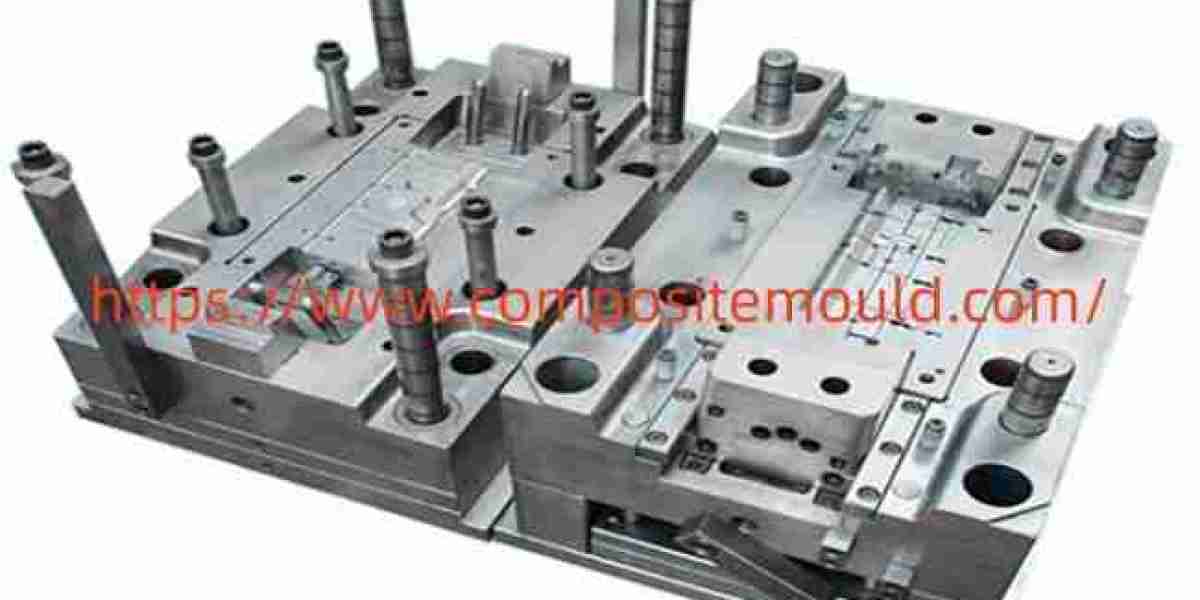
SMC Mould is a tooling solution used to shape sheet molding compound into designed composite components for industrial and commercial applications. The process can create parts with defined dimensions, surface details, mounting features, and structural forms according to the requirements of the finished product. Compositemould provides composite tooling and production support for different industries, helping buyers connect product design, material selection, tooling development, sample evaluation, and manufacturing planning.
The Basic Role In Composite Production
The main purpose of the tooling is to provide a controlled cavity in which the prepared compound is formed.
During processing, material is placed into the tool and shaped under controlled heat and pressure. Once the cycle is completed, the formed component is removed and prepared for the next manufacturing stage.
This approach can support repeat production because each cycle follows a defined tooling structure.
The final part still depends on material formulation, processing conditions, component design, and production control. Tooling is one part of the complete manufacturing system.
Why Product Design Matters First
Tool development should begin with the finished component.
Engineers need information about dimensions, wall structure, openings, mounting points, ribs, curves, surface details, and other features before tooling can be developed.
A poorly defined product concept can lead to repeated changes during tooling development.
For this reason, buyers can prepare drawings, three dimensional models, technical specifications, expected production quantities, and surface requirements before starting the project.
A clear design provides the tooling team with a more useful reference.
Supporting Complex Composite Shapes
Composite components can be designed with different geometries.
Housings may require integrated mounting points. Covers can include openings and ribs. Structural parts may need specific curves or reinforced sections.
The tooling needs to reproduce these details consistently while also allowing the finished part to be removed after forming.
Engineers therefore consider draft angles, parting lines, ejecting methods, cavity structure, and other tooling features during development.
These details influence how easily the component can move from design to repeat production.
Suitable For Different Industries
Composite parts are used across many industrial sectors.
Electrical equipment may require insulated housings and covers. Automotive applications can involve body related components or structural parts. Industrial machinery may use protective panels or enclosures.
Infrastructure projects can also use composite components where material characteristics suit the application.
The required tooling depends on the final component rather than the industry name alone.
Buyers should provide application information so the manufacturer can understand the intended working environment and production requirements.
Material And Tooling Need To Match
Sheet molding compound can be formulated for different applications.
The material formulation may influence mechanical behavior, surface appearance, processing conditions, and other characteristics of the finished component.
Tooling design should therefore correspond with the selected material and processing method.
Factors such as heating behavior, pressure, curing conditions, cavity geometry, and surface requirements can affect the development process.
Communication between the material team, product designer, and tooling manufacturer can help keep these variables aligned.
Surface Finish Is Part Of The Planning
The surface of a finished composite component can affect how it looks and how it is used.
Some products may require a smooth decorative appearance. Others may need textures, markings, or controlled surface patterns.
The tooling surface can play an important role in reproducing these details.
Buyers should define the intended appearance before tooling production begins.
Samples can then be reviewed for surface texture, color, dimensions, edges, and other relevant features before larger production is confirmed.
Sample Testing Provides Useful Feedback
A first sample can reveal whether the tooling corresponds with the intended part.
Engineers can review dimensions, openings, mounting points, surface details, thickness distribution, and assembly compatibility.
If adjustments are needed, changes can be made while the project is still in development.
This can be particularly useful for new products or customized components.
Once the sample is approved, it can become a reference for future manufacturing and inspection.
Production Consistency Depends On More Than Tooling
A stable tool supports repeatability, but other production factors also matter.
Material preparation, loading method, heating, pressure, cycle time, operator procedures, and inspection can influence the final part.
Manufacturers need to control these stages together.
Buyers can therefore ask about the complete production process rather than evaluating the tooling alone.
For recurring orders, documented process conditions and approved samples can help maintain a consistent reference between different batches.
Maintenance Planning Matters
Tooling is used repeatedly, so maintenance should be considered from the beginning.
Regular inspection can identify wear, surface changes, damage, or other conditions that may affect the finished part.
Cleaning and scheduled maintenance can also help preserve the intended tooling condition.
For longer production programs, buyers can discuss maintenance procedures and expected service requirements with the manufacturer.
Good maintenance planning can make production management more organized and help reduce unexpected interruptions.
Customization For Different Products
Not every customer needs a standard tool.
A project may require different dimensions, surface details, mounting structures, parting arrangements, or production quantities.
Compositemould supports customized composite tooling projects and can discuss component drawings, material requirements, surface specifications, and expected production volumes.
For customized development, early communication is useful because changes to the part design can affect the tooling structure.
Buyers should therefore confirm the product design before detailed tooling production begins.
Production Quantity Influences Tooling Decisions
A prototype project and a large production program may have different tooling priorities.
For smaller quantities, buyers may focus on development flexibility and sample evaluation.
For repeated manufacturing, production cycle requirements, maintenance planning, dimensional consistency, and long term tooling management become more important.
The expected quantity should be discussed before the project begins.
This helps the manufacturer evaluate the tooling arrangement according to the actual production plan.
What Buyers Should Check
Before ordering, buyers can prepare several important details.
These include component drawings, material formulation, surface finish, dimensions, tolerances, production quantity, equipment conditions, expected cycle frequency, and delivery schedule.
They can also ask about sample approval, inspection procedures, tooling maintenance, spare parts, and technical documentation.
A clear specification gives both sides a shared reference during design and manufacturing.
Why Consider Compositemould
Compositemould provides composite tooling solutions for different industrial applications and supports communication around product dimensions, material requirements, surface details, production quantities, customization, and project schedules.
Buyers can discuss drawings and application conditions before tooling development begins.
For equipment manufacturers, component suppliers, and project developers, this can help connect product design with actual manufacturing requirements.
A practical sourcing process should cover tooling development, sample evaluation, production, inspection, maintenance, and delivery coordination.
Building A Practical Composite Tooling Process
A useful project can begin with product design and then move through material selection, tooling development, sample production, technical adjustment, approval, repeat manufacturing, inspection, and maintenance planning.
Each stage should have a clear reference.
When the design changes, the manufacturer and buyer should confirm whether the tooling also needs adjustment.
This helps avoid confusion between product revisions and production requirements.
Compositemould provides composite tooling solutions for different applications, and buyers can review relevant company and project information at https://www.compositemould.com/